Welcome to Huazhijie!
 +86-572-8086381 / 8282992
  hzjfence1@hzjfence.com


May 13, 2026
Content
PVC fence — also widely sold as vinyl fence — is fencing made from polyvinyl chloride, a rigid thermoplastic that is extruded into rails, posts, and pickets and assembled into fence panels. The material has been used in residential and commercial fencing since the 1980s and has grown steadily in market share as homeowners and contractors have come to appreciate its low maintenance requirements, long service life, and consistent appearance over decades of outdoor exposure. It does not rot, rust, splinter, or require painting, which addresses the three most common complaints about the two materials it most directly competes with: wood and metal.
The popularity of PVC vinyl fence is partly a reflection of how maintenance costs accumulate over time. A wood fence looks good when first installed but requires staining or painting every few years, is vulnerable to moisture damage and insect attack, and typically needs significant repair or replacement within 15–20 years in most climates. A quality PVC fence installed correctly requires essentially no maintenance beyond occasional washing and holds its appearance for 25–30 years or more. When buyers factor in the true total cost of ownership rather than just the initial installation price, PVC frequently competes more favorably with wood than the upfront price comparison suggests.
PVC fencing is available in a range of styles that serve different functional and aesthetic purposes, and the style you choose should be driven by what you actually need the fence to do — provide privacy, mark a boundary, contain pets or children, or add a decorative element to the landscape. Each style has a distinct profile and suits different applications.
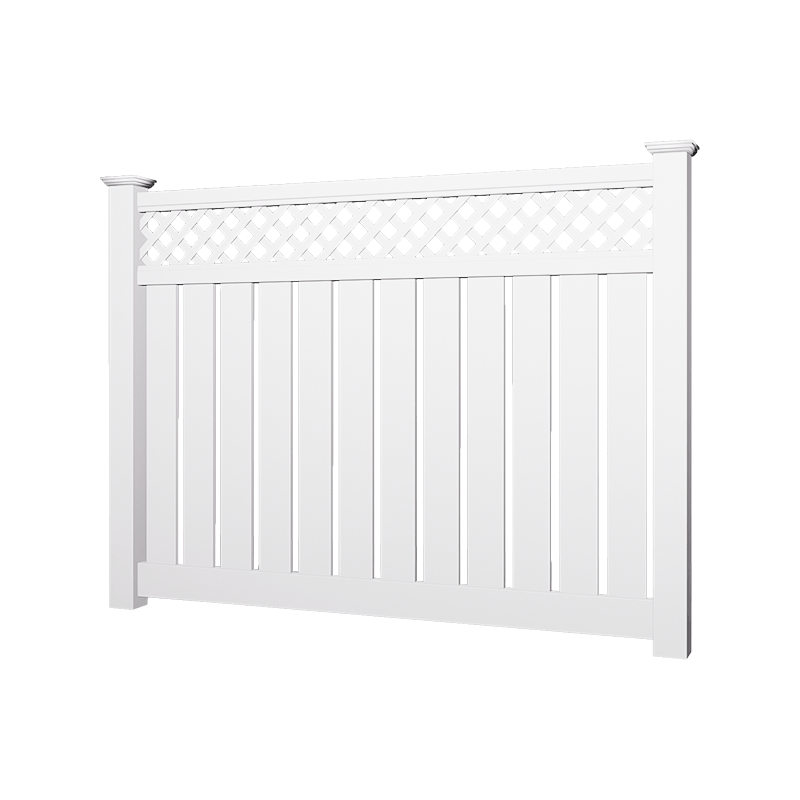
PVC privacy fence panels use closely spaced vertical pickets — typically with no gap between them — to create a solid visual barrier between your property and adjacent spaces. This is the most popular residential PVC fence style for rear yards and side property lines where privacy from neighbors or passing traffic is the primary goal. Standard heights run from 4 feet to 8 feet, with 6-foot panels being the most common residential specification. Privacy fence panels are available in flat-top, dog-ear, and lattice-top profiles, with the lattice-top variant adding a decorative open section at the upper portion of the panel while maintaining solid coverage at eye level. For applications where both privacy and airflow matter — pool enclosures in warm climates, for example — some manufacturers offer privacy panels with small consistent gaps between pickets that reduce wind load on the fence while maintaining visual screening.
The classic white PVC picket fence is one of the most recognizable residential fence styles — evenly spaced vertical pickets with pointed or rounded tops set between horizontal rails, typically 3 to 4 feet high. PVC picket fence serves primarily as a decorative boundary marker and light containment solution for front yards and garden beds rather than a security or privacy barrier. It defines property edges cleanly without blocking sight lines, works well as a garden border, and is commonly used alongside driveways and walkways for a tidy, traditional appearance. The white finish is by far the most popular color choice for picket applications, though tan, gray, and wood-grain textured options are available from most manufacturers.
PVC split rail and ranch rail fences replicate the look of traditional timber post-and-rail fencing in a maintenance-free material. These styles use widely spaced horizontal rails set into routed posts, creating an open fence that marks boundaries without blocking views — well suited to larger properties, rural-style landscapes, and pasture areas where visual demarcation matters more than containment or privacy. PVC ranch rail is a practical choice for horse properties and agricultural settings where the visual aesthetic of traditional wood rail fencing is desired without the ongoing maintenance of real timber. The open construction also makes these styles less susceptible to wind load than solid panel designs, which is a structural advantage in exposed locations.
Shadowbox PVC fence uses alternating pickets on either side of the rails — one picket on the front, the next on the back, with a small overlap — creating a fence that appears solid from straight on but allows air movement through the alternating gaps. This construction reduces wind load on the fence structure compared to a fully solid privacy panel, which makes it a structurally preferable option in areas with high wind exposure. It also has the visual advantage of looking the same from both sides, which is a consideration when the fence faces a neighbor's property. Semi-privacy styles with consistent small gaps between pickets achieve a similar balance of visual screening and airflow in a simpler construction than the full shadowbox pattern.
Not all PVC fence is made to the same standard, and the differences in material quality have a direct and measurable impact on how the fence performs over its life — particularly in terms of UV resistance, impact strength in cold weather, and resistance to color fading and surface chalking. The gap between a quality PVC fence product and a budget one is not always obvious at purchase, but it becomes very apparent after five to ten years of outdoor exposure.
Quality PVC fence is manufactured from virgin (unrecycled) PVC compound with a titanium dioxide UV stabilizer package blended into the material. Virgin PVC produces a more consistent, denser material with predictable long-term properties. Budget fence products often use recycled PVC or a virgin/recycled blend — the recycled content reduces material cost but also reduces consistency, UV resistance, and impact strength. From the outside, virgin and recycled PVC fence can look identical when new, but recycled content products are more likely to develop surface yellowing, chalking, and brittleness within the first decade of service. Most quality manufacturers explicitly state "virgin PVC" in their product specifications; if a product listing or spec sheet doesn't mention material composition, that is worth clarifying before purchase.
The wall thickness of PVC fence components — posts, rails, and pickets — directly determines their structural rigidity and impact resistance. Minimum wall thickness for quality residential fence posts is typically 0.120–0.150 inches; budget products often come in at 0.080–0.090 inches, which is noticeably less rigid and more susceptible to cracking under impact or in cold-weather brittleness conditions. Internal ribbing or cellular reinforcement within the hollow sections adds stiffness without adding weight and is a feature of better-quality fence systems. For posts in particular, which take the primary structural load of the fence, wall thickness is critical — a thin-walled post set in concrete may look fine initially but will flex excessively under wind load and is more likely to crack at the post base over time.
PVC without adequate UV stabilization yellows, chalks, and becomes brittle when exposed to sunlight over time — a process caused by the breakdown of the polymer chains by ultraviolet radiation. Quality PVC fence compounds include titanium dioxide (TiO2) as a UV blocker and stabilizer, blended through the full thickness of the material so that surface wear or minor scratching does not expose unstabilized material underneath. The TiO2 content and the quality of the overall stabilizer package determine how well the fence retains its white color and surface finish over decades of sun exposure. Manufacturers who test their products to ASTM D4726 (standard specification for rigid PVC exterior profiles) or equivalent standards and publish those results are giving buyers verifiable evidence of UV performance rather than marketing claims.
| Feature | PVC / Vinyl Fence | Wood Fence | Aluminum Fence |
| Maintenance Required | Very Low | High | Low |
| Typical Lifespan | 25–30+ years | 10–20 years | 30+ years |
| Privacy Options | Excellent | Excellent | Limited |
| Rot / Rust Resistance | Fully resistant | Vulnerable to rot | Fully resistant |
| Initial Cost | Medium–High | Low–Medium | Medium–High |
| Color / Style Options | Good | Excellent | Good |
| Cold Weather Performance | Good (quality PVC) | Can warp / crack | Excellent |
PVC fence installation is a manageable DIY project for homeowners with basic construction skills and the right tools, but it involves more precision than it might appear from the outside. The fence's finished appearance depends heavily on accurate layout and post setting — errors at the post stage are difficult and expensive to correct after concrete has been poured.
PVC fence panels come in standard widths — typically 6 or 8 feet — and post spacing must be set to match panel width exactly, since PVC rails and picket assemblies are not easily trimmed in the field without specialized tools and the result rarely looks clean. Establish the fence line with string and stakes before digging any post holes, measure the total run, and plan panel spacing to avoid ending on a very short partial panel at a corner or gate. Corner posts, end posts, and line posts have different structural requirements — corner and end posts typically need deeper setting depth and larger diameter holes than intermediate line posts because they carry greater lateral loads.
The standard rule for fence post depth is one-third of the total post length below grade — a 9-foot post set 3 feet in the ground leaves 6 feet of above-grade height for a 6-foot fence panel. In areas with significant frost penetration, posts must be set below the frost line to prevent heaving — check the local frost depth for your area and increase post length accordingly. Post holes should be at least three times the post diameter in width to allow adequate concrete around the post; a 4-inch square post needs a minimum 12-inch diameter hole. Use fast-setting concrete mixed dry in the hole according to the manufacturer's instructions, crown the concrete slightly above grade, and allow full cure time before attaching panels — typically 24–48 hours minimum.
PVC expands and contracts significantly with temperature changes — a 6-foot rail can move up to 3/8 inch between winter cold and summer heat in a continental climate. Quality PVC fence systems accommodate this through routed slots in posts that allow rail ends to slide rather than being rigidly fixed, and through assembly instructions that specify not to glue rails into post slots. Follow manufacturer assembly instructions on this point exactly — gluing rails or applying construction adhesive to rail connections that are designed to float is one of the most common causes of PVC fence panel buckling and rail cracking. Gate hardware should also be rated for PVC fence and mounted using the backing plates or reinforcement blocks supplied or specified by the fence manufacturer to prevent pull-through of screws in the hollow fence sections.
One of PVC fence's primary selling points is low maintenance, and that claim is largely accurate — but "low maintenance" is not the same as "no maintenance." A PVC vinyl fence left completely unattended will accumulate surface dirt, algae, and mildew staining over time, particularly in shaded or humid environments, and once organic staining establishes itself it requires more effort to remove than if addressed regularly.
Annual washing with a garden hose and a soft brush removes most surface dirt and prevents the buildup that leads to staining. For algae and mildew stains — which typically appear as green or black discoloration on the lower portions of the fence — a solution of one part white vinegar to two parts water, or a dilute bleach solution of one part bleach to ten parts water, applied with a soft brush and rinsed thoroughly, removes most organic staining without damaging the PVC surface. Avoid abrasive scrubbing pads or harsh chemical solvents — these scratch the surface finish and can accelerate yellowing by removing the stabilized outer layer of the PVC compound. Pressure washing is effective for annual cleaning but should be done at moderate pressure with a wide fan nozzle — very high pressure directed at panel joints or post connections can force water into the fence structure and damage the locking mechanisms of the panel assembly over time.
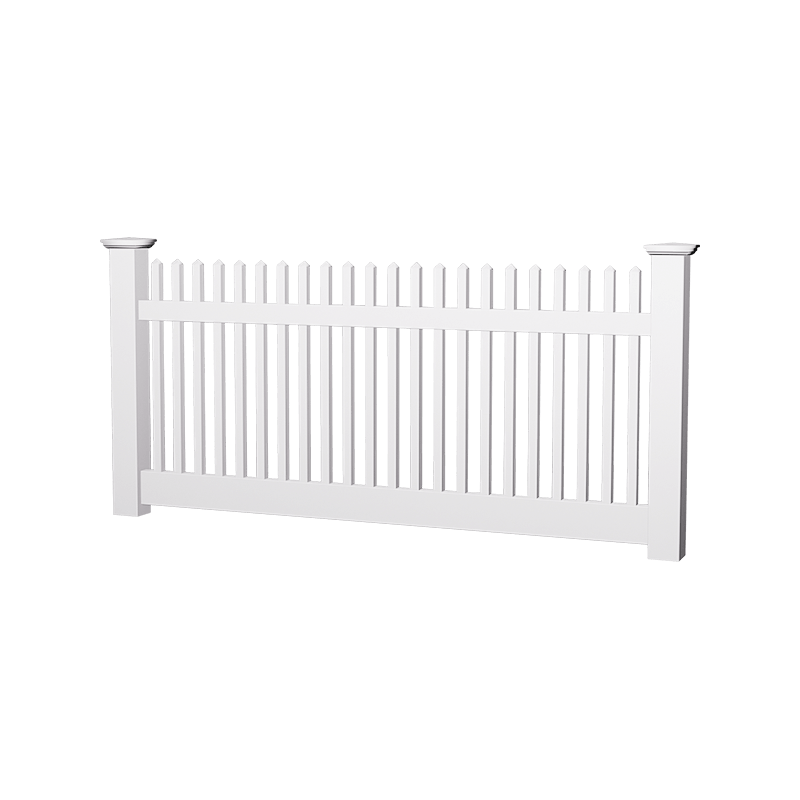
Our 1.5"x1.5" Horizontal Picket Fence, the ultimate garden solution made from 100% virgin PVC for unmatched durability and low maintenance. Designed for easy DIY installation, this fire-proof fence re...
See Details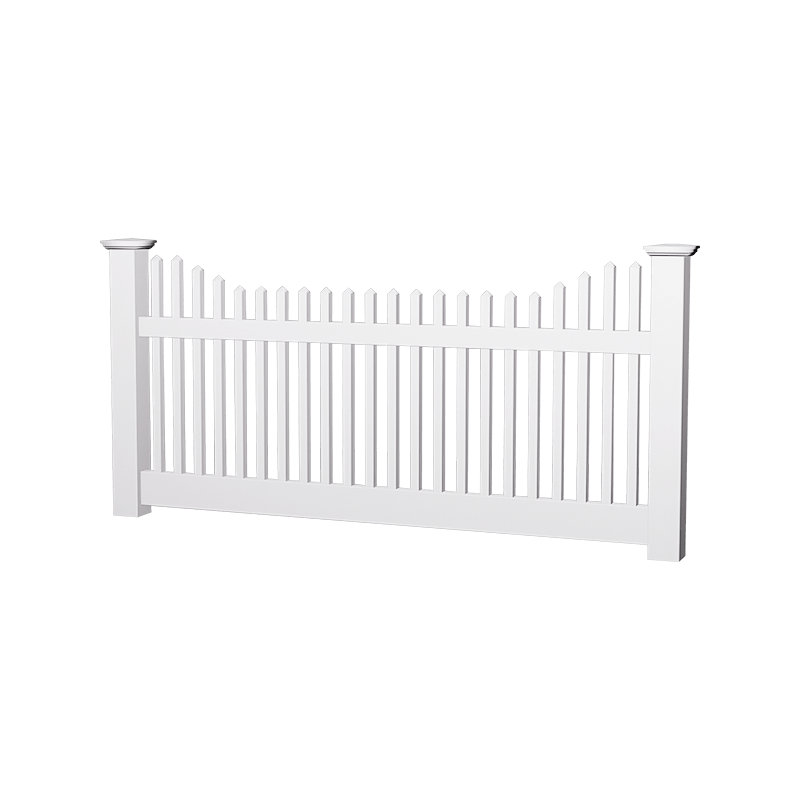
The Special-Shaped Picket Fence, the perfect addition to any home. Crafted from 100% virgin PVC, this fence combines durability and elegance with low maintenance requirements. Designed for easy DIY in...
See Details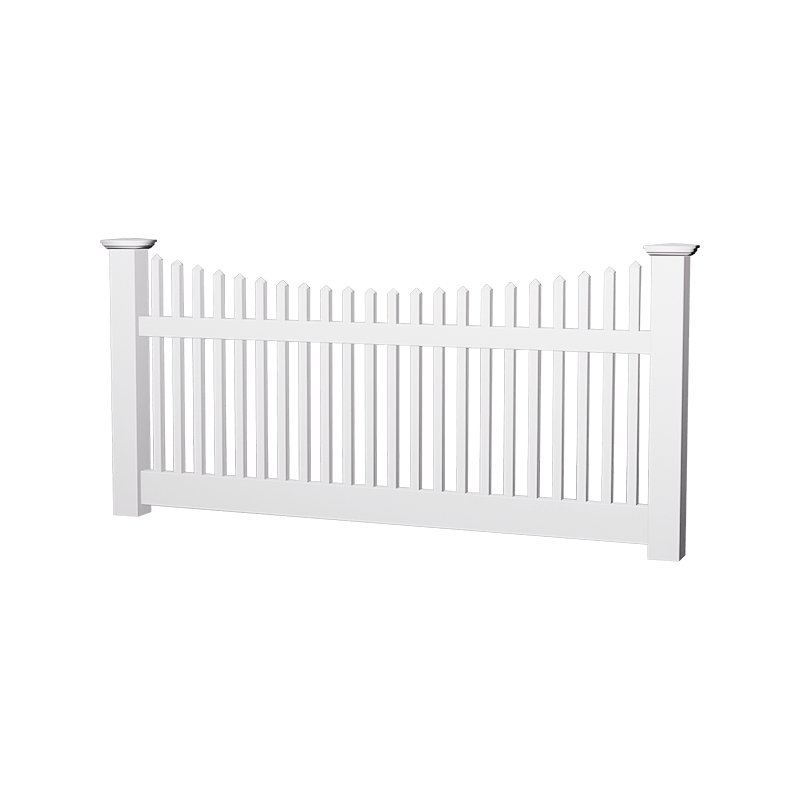
The Special-Shaped Picket Fence, the perfect addition to any home. Crafted from 100% virgin PVC, this fence combines durability and elegance with low maintenance requirements. Designed for easy DIY in...
See Details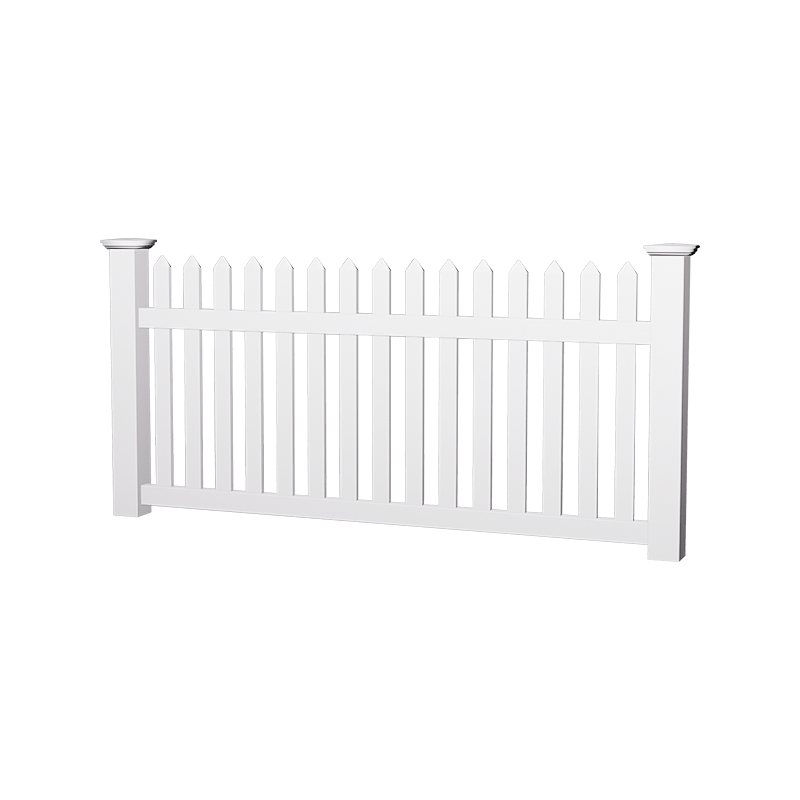
Enhance your home’s exterior with our Traditional Straight Spade Fence, crafted from 100% virgin PVC for exceptional durability and style. This low-maintenance solution is designed for easy installati...
See Details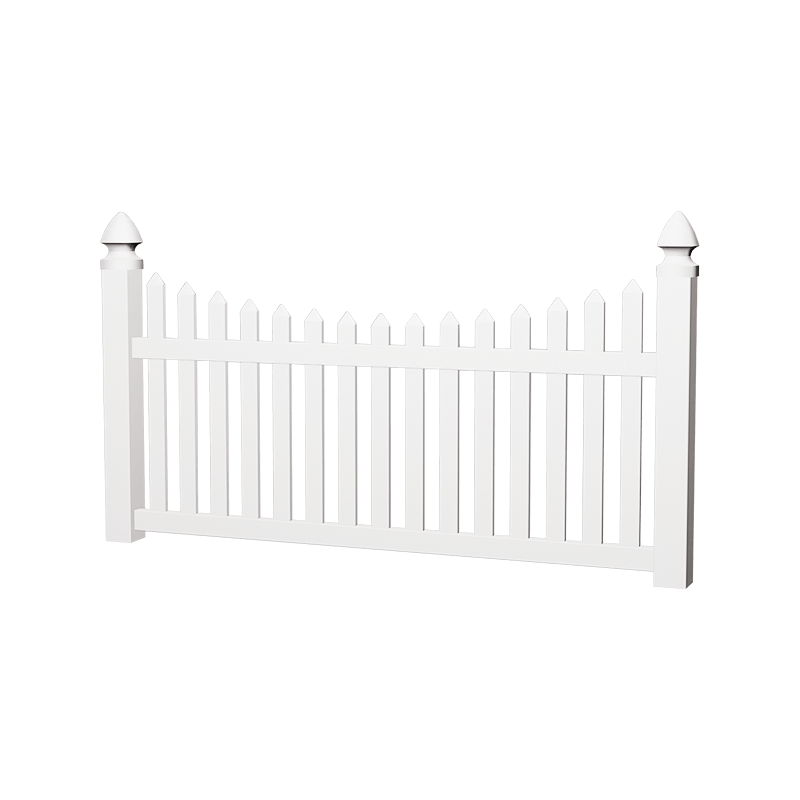
Transform your outdoor space with our 7/8"x3" Outdoor Picket Fence, specifically designed for farm use and outdoor applications. Crafted from 100% Virgin PVC, this durable and high-impact resistant fe...
See Details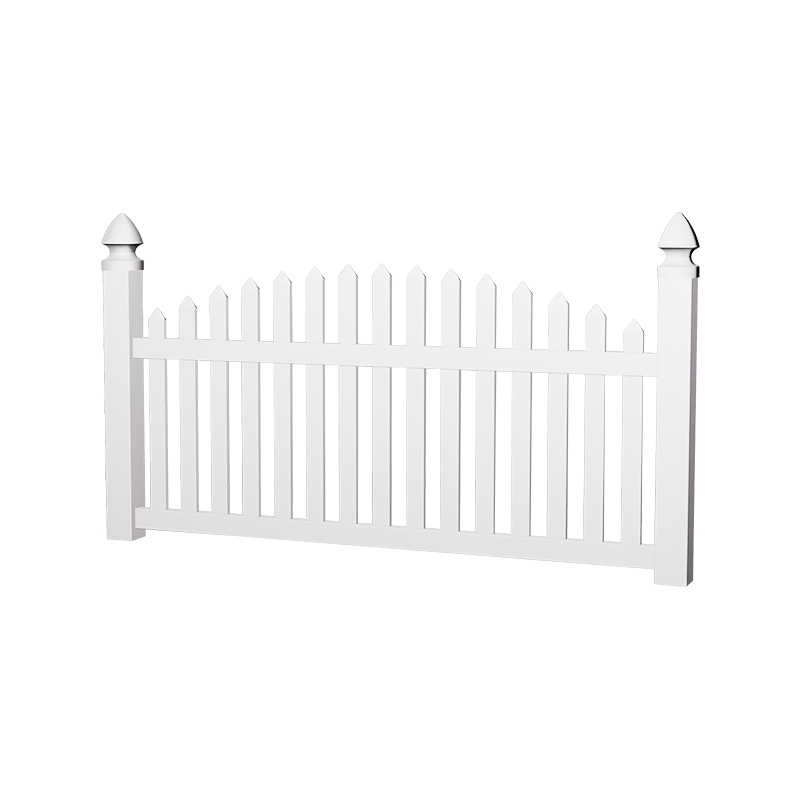
Enhance your farm's aesthetic and functionality with our PVC Arched Picket Fence. Crafted from 100% virgin PVC, this durable and stylish fencing solution combines the classic charm of traditional pick...
See Details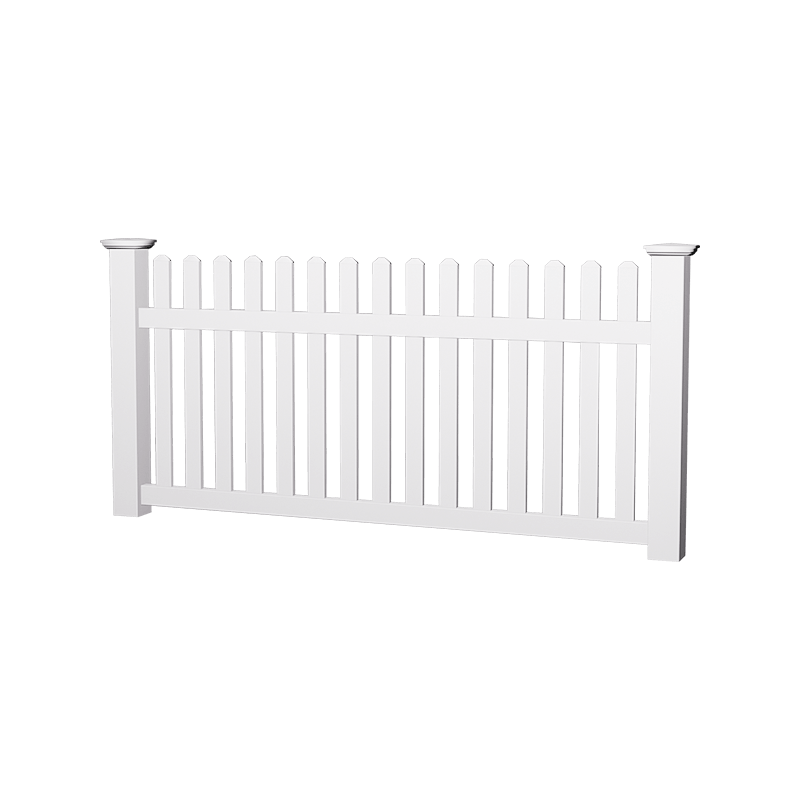
Our durable and versatile Picket Fence, designed specifically for farm use. Crafted from 100% virgin PVC plastic, this fence panel is not coated, ensuring superior quality and longevity. With dimensio...
See Details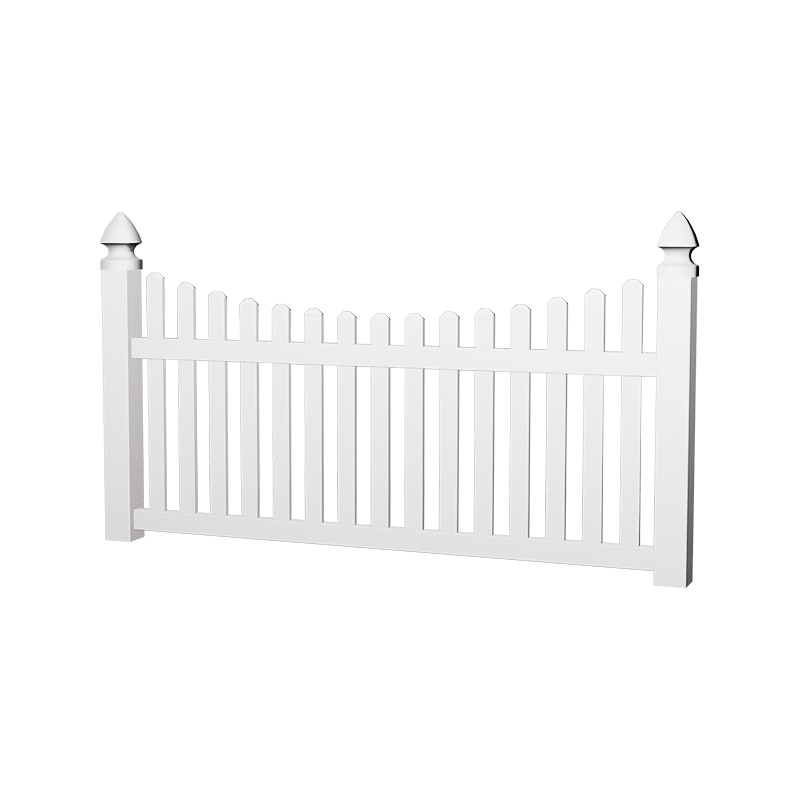
Introducing our 7/8"x3" Plastic Picket, designed specifically for farm applications. Crafted from 100% virgin PVC, this picket is not coated, ensuring maximum durability and resistance to impacts. Wit...
See Details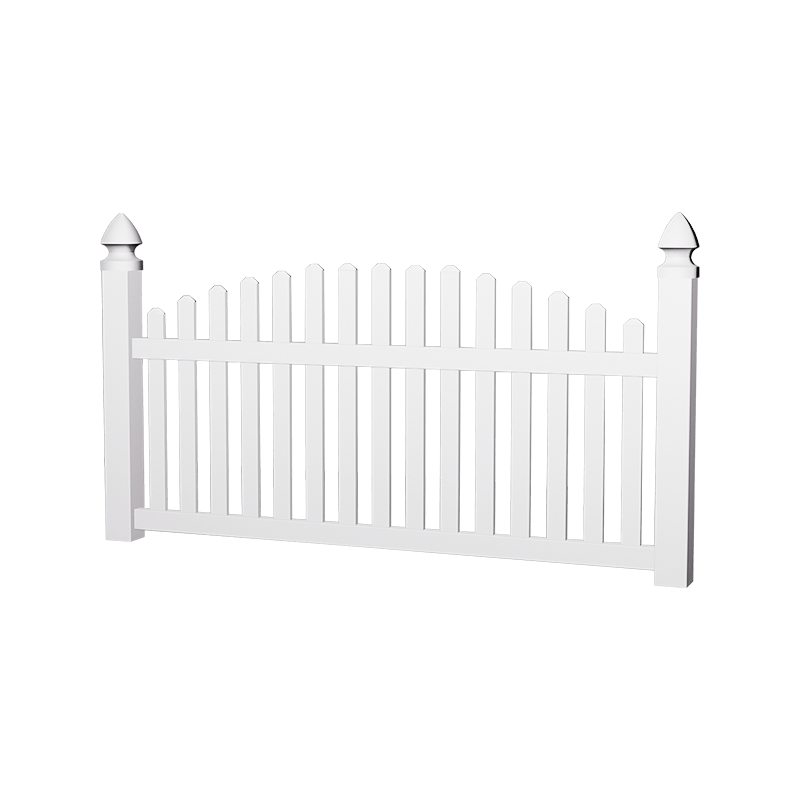
The Dog Ear Top Garden Fence, the ultimate solution for your farm fencing needs. Crafted from 100% virgin PVC, this fence is designed to withstand the elements without the worry of rot or decay, makin...
See Details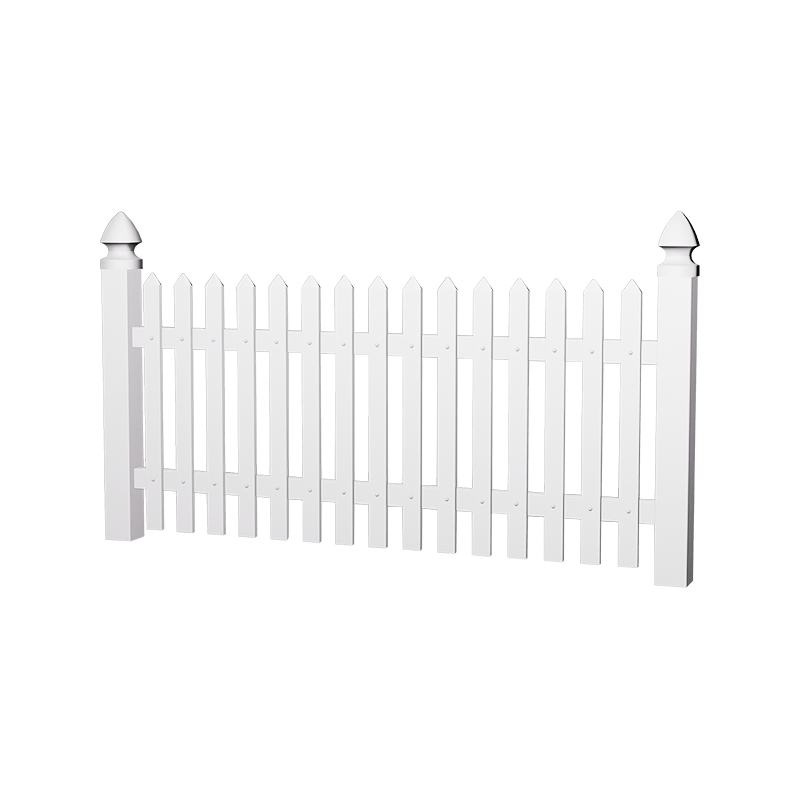
Decorate your outdoor spaces with our durable and stylish PVC Face Mounted Pickets Fence. Designed for easy installation and long-lasting performance, this fence is perfect for residential and commerc...
See Details
Our White Vinyl Fence, measuring 4'H x 8'W, designed for both functionality and aesthetics. Made from 100% virgin PVC plastic, this fence is not coated, ensuring unmatched durability and resistance to...
See Details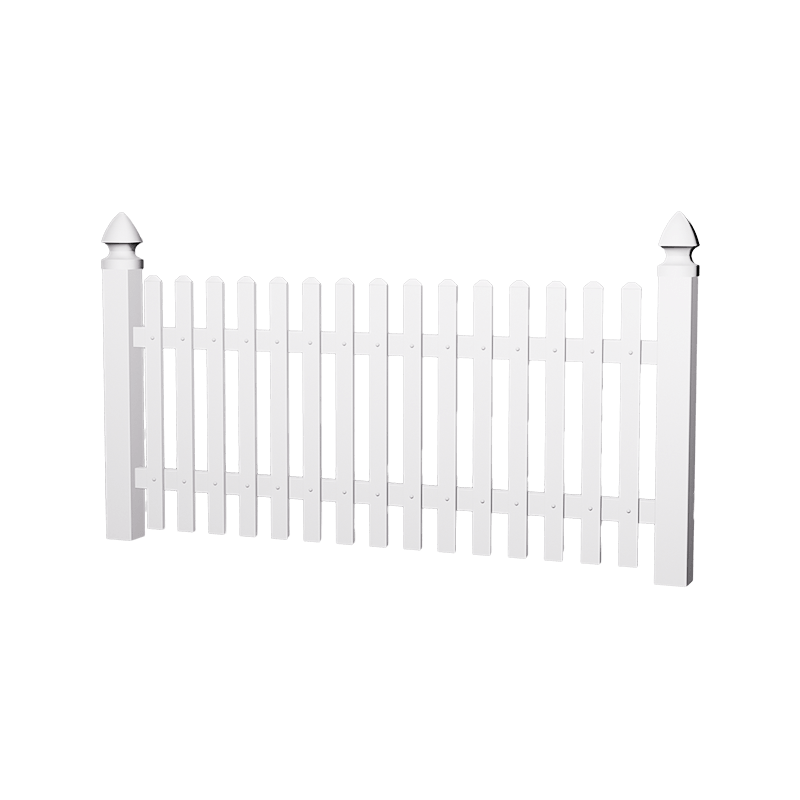
The Traditional Dog Ear Picket is an ideal choice for warehouses, combining aesthetic appeal with practicality. Made from 100% virgin PVC, this durable, low-maintenance fence resists rotting and water...
See Details
We are a professional manufacturer engaged in the research, development,
production, sale, and service of PVC fences and PVC flooring.
Contact Us
Mobile
Copyright © Deqing Huazhijie Railing & Fencing Co.,Ltd. All Rights Reserved.
 Custom Vinyl Fence Manufacturers
 English
 عربى
عربى 中文简体
中文简体 Español