Welcome to Huazhijie!
 +86-572-8086381 / 8282992
  hzjfence1@hzjfence.com


Sep 30, 2026
A sign only earns its keep when people notice it, and what people notice first is usually how high it stands. In outdoor signage, the height PVC sign frame is one of those products that looks simple until a project actually gets specified. Whether you are quoting a real estate sign holder, marking a construction access route, or anchoring wayfinding panels around a commercial plaza, the length of the posts and the amount of frame left above grade decide how readable the sign is and how long it stays upright.
We build PVC posts, panels, and fittings in our own extrusion lines, and the height question comes up in almost every inquiry. This article walks through what height actually means for a PVC sign frame, which sizes suit which jobs, and how to avoid the classic mistake of ordering a frame that leans, sags, or bends in the first strong wind.
Content
When a buyer says they need a frame that is six feet tall, that single number can mean four different measurements. Keeping them separate saves a great deal of back-and-forth before a quotation is issued.
The arithmetic is simple once the terms are separated: total post length equals above-grade height plus embedment depth. A frame that should stand five feet above the ground with thirty inches buried needs a post of roughly seven and a half feet. Missing that step is the most common reason a delivered frame looks far shorter on site than it did on paper.
The table below is a practical starting point rather than a rule book. Frost depth, wind exposure, and panel size can all push the final figure up or down.
| Above-grade height | Typical total post length | Common applications | Reference embedment |
|---|---|---|---|
| 3 to 4 ft (0.9 to 1.2 m) | 5 to 6 ft | Garden labels, planting notes, temporary event direction | 18 to 24 in |
| 4 to 5 ft (1.2 to 1.5 m) | 6 to 7 ft | Real estate signage, lawn signs, pet zone notices | 24 to 30 in |
| 5 to 6 ft (1.5 to 1.8 m) | 7 to 8 ft | Neighborhood entrance boards, pathway wayfinding, parking notices | 30 to 36 in |
| 6 to 8 ft (1.8 to 2.4 m) | 9 to 11 ft | Commercial premises signs, site safety notices, municipal identification | 36 in and deeper |
Two patterns are worth remembering. First, pedestrian-facing signs rarely need to exceed six feet, because reading comfort drops when the message sits too far above eye level. Second, vehicle-facing signs usually need to clear parked cars and shrubs, which is why the taller rows in the table tend to appear along driveways, loading zones, and security checkpoints.
Doubling the visible height of a sign frame does not simply double the load its base has to resist. A taller frame exposes more surface area to the wind, and it lengthens the lever arm acting on the point where the post meets the ground. Those two effects multiply, which is why the same panel that behaves perfectly on a four-foot frame can twist an eight-foot frame out of line.
Material choice matters here as well. PVC resists moisture, rot, insects, and ultraviolet fading far better than untreated timber, but it is less rigid than steel or aluminum at equal cross-section. The practical answer is not to avoid PVC at height, it is to increase the section. Moving from a smaller square post to a larger one, or from a thin wall to a thicker one, often does more for stiffness than pouring a bigger concrete collar.
Watch for these warning signs in a specification:
Standard lengths cover most projects, but a surprising number of jobs fall outside the catalog. A custom height PVC sign frame earns its place in situations such as these:
Because our PVC profiles are extruded in house, changing a post length is a matter of cutting and finishing rather than rebuilding a mold. We also accept OEM and ODM work, so buyers can specify wall thickness, cap style, and mounting details alongside the height.
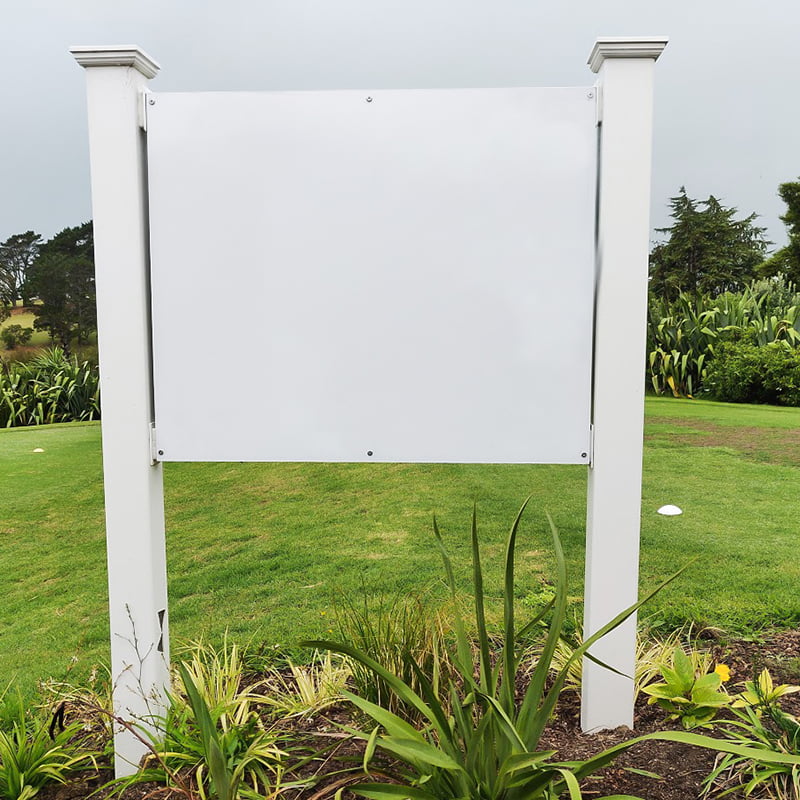 Custom height pvc sign frameOur Custom Height PVC Sign Frame, expertly crafted from 100% virgin PVC for maximum durability and aesthetic appeal. This frame is available in a crisp white color, ma...View Product →
For projects that need a conventional configuration instead, a flat cap post keeps the top face clean and sheds water away from the hollow core, which is a small detail that pays off over years of outdoor exposure.
A useful starting point is to bury between one quarter and one third of the total post length. That means a seven-foot post goes roughly twenty-one to twenty-eight inches into the ground. In cold regions, the footing should also extend below the local frost line, otherwise freeze and thaw cycles will lift the post season after season.
Concrete gives the firmest hold and suits tall frames, heavy panels, and any location exposed to strong winds. Compacted crushed stone drains better and is easier to remove later, so it suits temporary installations and soft landscaped areas. Whatever the choice, the hole should be wider than the post so the fill surrounds it evenly on every side.
Before backfilling, check the frame with a spirit level in two directions. A post that looks straight from the sidewalk can lean noticeably when viewed from the road, and correcting it after the concrete sets is far more work than a two-minute check beforehand.
Routine care is minimal. A soft cloth, water, and mild household detergent remove dust and pollen without dulling the surface. Abrasive pads, wire brushes, and solvent-based cleaners are best avoided because they scratch the skin and can leave a chalky patch. Once or twice a year, walk the line and confirm that no post has risen or shifted; a frame that was set correctly at installation usually holds its height for many seasons.
Volume buyers get better results when they standardize a small number of heights rather than offering every length as a separate item. Two or three stock post lengths, plus an in-house cutting service for on-site adjustments, usually cover the majority of orders without bloating inventory.
Three questions are worth asking any supplier before placing a bulk order: what is the wall thickness of the post profile, how is the hollow section reinforced at the rail connections, and how are the frames packed for shipment. Answers to those three points predict field performance far more reliably than a picture of the finished product.
If you would like a more structured approach before your next supplier meeting, this practical guide to selecting, installing, and maintaining PVC sign posts covers the same ground from a purchaser's perspective.
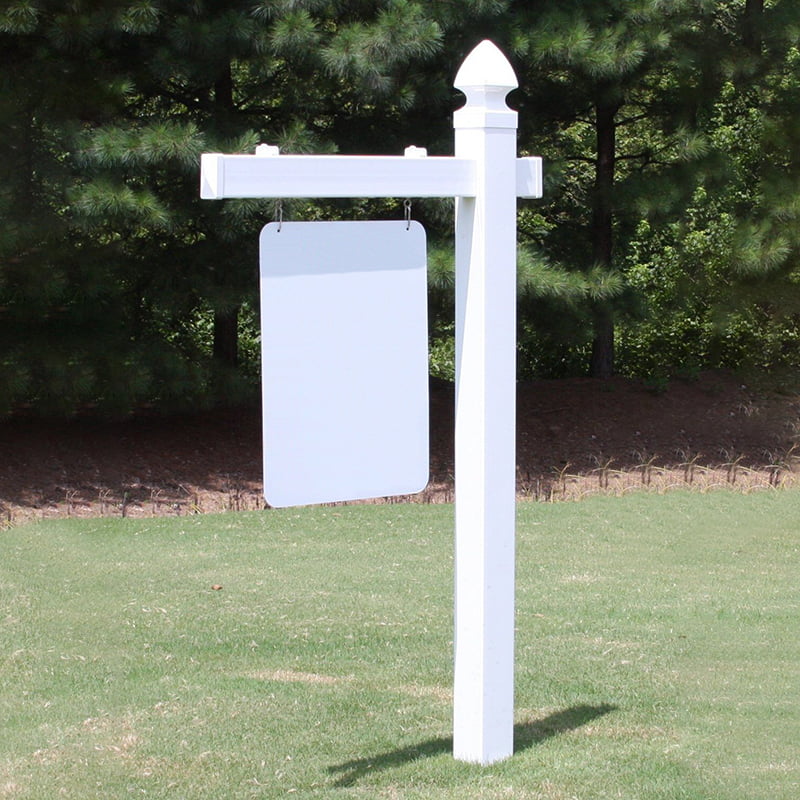 Flat cap pvc sign postThe Flat Cap PVC Sign Post is designed for durability and versatility, constructed from 100% virgin PVC plastic. Its clean, white finish ensures a professional appeara...View Product →
Matching posts, caps, rails, and mounting hardware from a single production line also removes the small compatibility problems that appear when components come from different suppliers.
The right height for a PVC sign frame is never an abstract number. It comes from the size of the panel, the audience the sign serves, the depth of the soil it stands in, and the wind it has to survive. Decide those four things first, and the specification almost writes itself.
As a manufacturer of PVC fencing and related profiles since 2003, we are always glad to talk through post lengths, wall thickness, and cap options with buyers who are planning a project. Send over your panel drawing and site conditions, and we will suggest a frame height that looks right and stands right.
Our 1.5"x1.5" Horizontal Picket Fence, the ultimate garden solution made from 100% virgin PVC for unmatched durability and low maintenance. Designed for easy DIY installation, this fire-proof fence re...
See Details
The Special-Shaped Picket Fence, the perfect addition to any home. Crafted from 100% virgin PVC, this fence combines durability and elegance with low maintenance requirements. Designed for easy DIY in...
See Details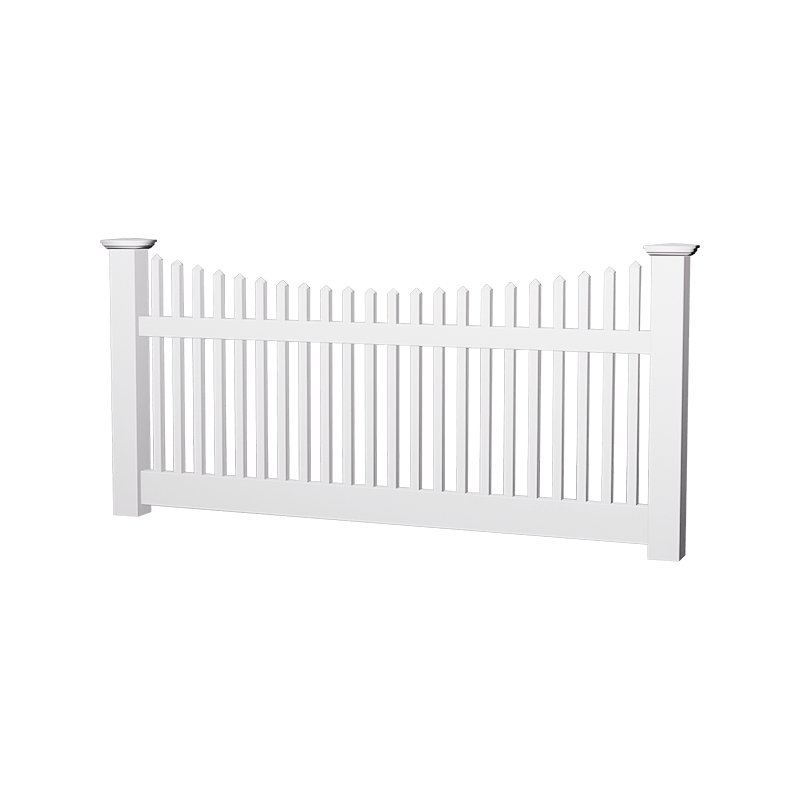
The Special-Shaped Picket Fence, the perfect addition to any home. Crafted from 100% virgin PVC, this fence combines durability and elegance with low maintenance requirements. Designed for easy DIY in...
See Details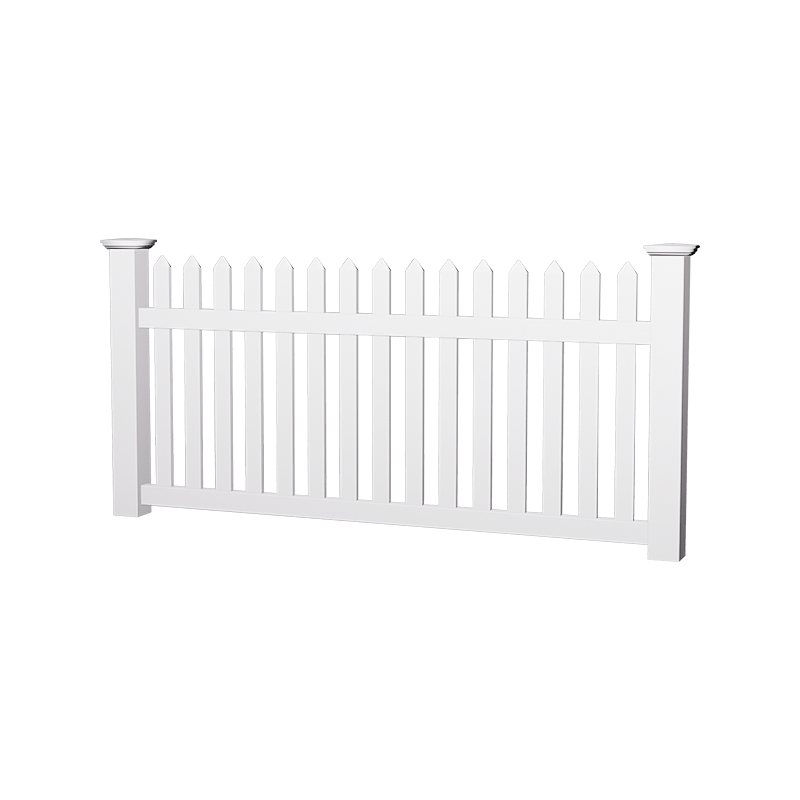
Enhance your home’s exterior with our Traditional Straight Spade Fence, crafted from 100% virgin PVC for exceptional durability and style. This low-maintenance solution is designed for easy installati...
See Details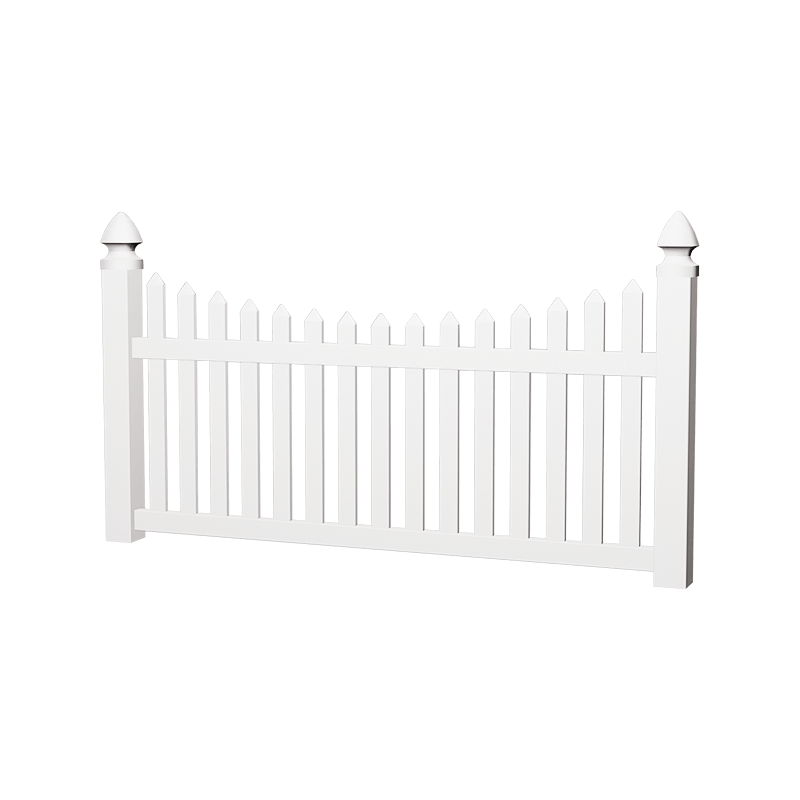
Transform your outdoor space with our 7/8"x3" Outdoor Picket Fence, specifically designed for farm use and outdoor applications. Crafted from 100% Virgin PVC, this durable and high-impact resistant fe...
See Details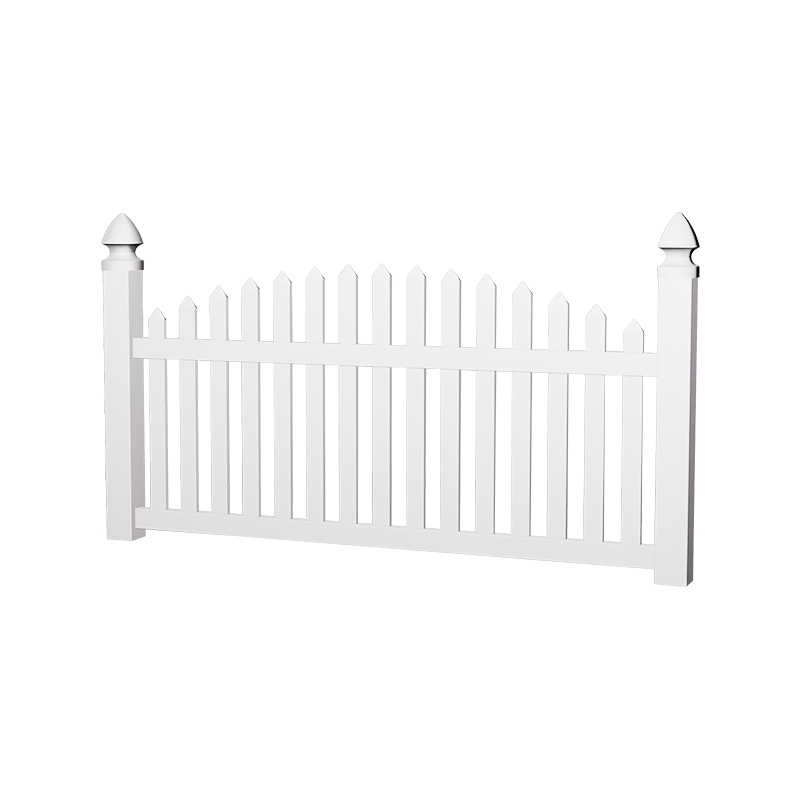
Enhance your farm's aesthetic and functionality with our PVC Arched Picket Fence. Crafted from 100% virgin PVC, this durable and stylish fencing solution combines the classic charm of traditional pick...
See Details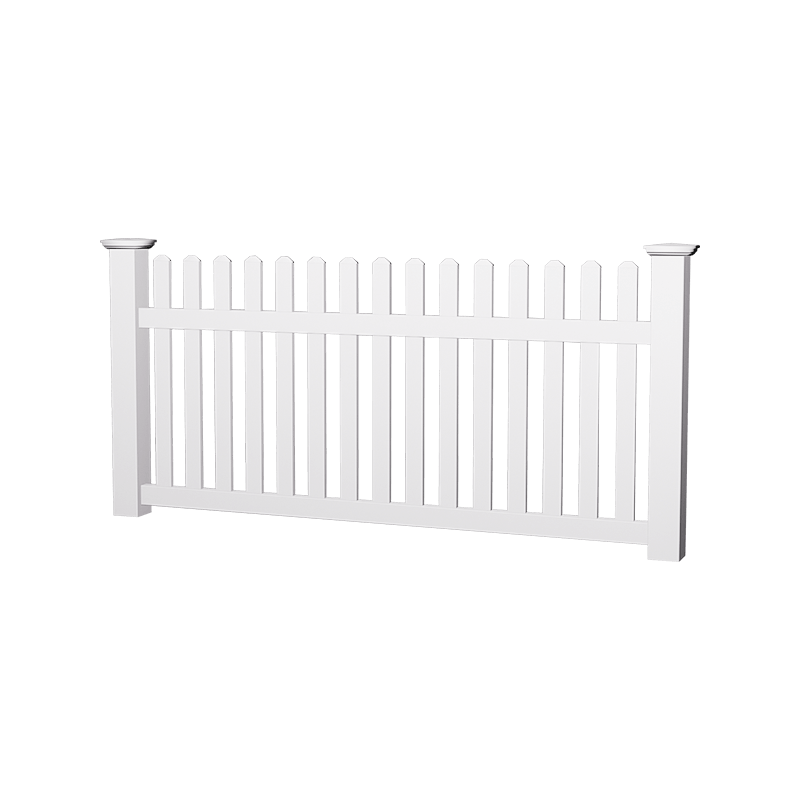
Our durable and versatile Picket Fence, designed specifically for farm use. Crafted from 100% virgin PVC plastic, this fence panel is not coated, ensuring superior quality and longevity. With dimensio...
See Details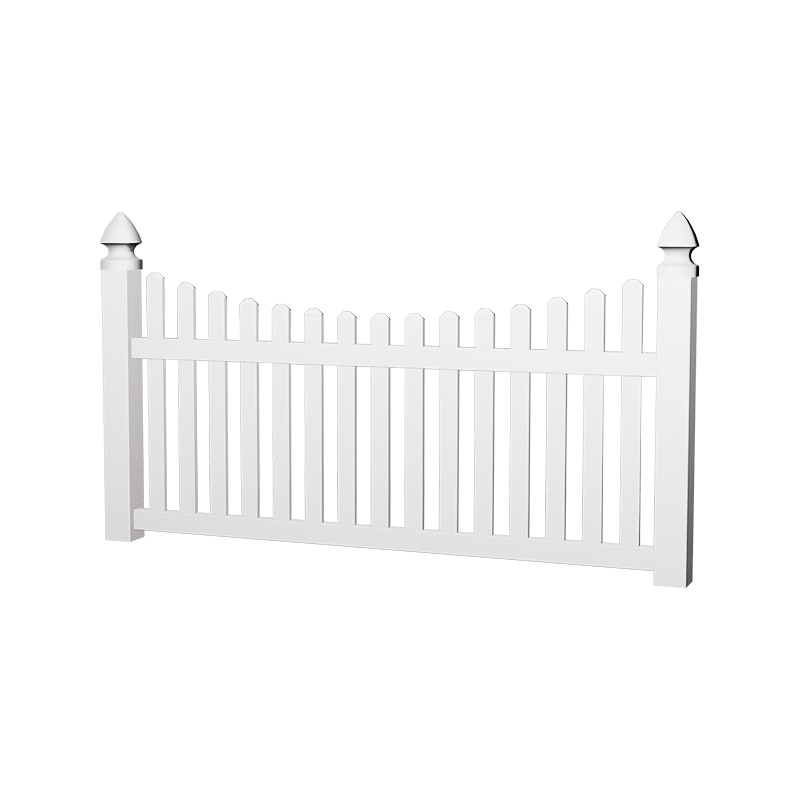
Introducing our 7/8"x3" Plastic Picket, designed specifically for farm applications. Crafted from 100% virgin PVC, this picket is not coated, ensuring maximum durability and resistance to impacts. Wit...
See Details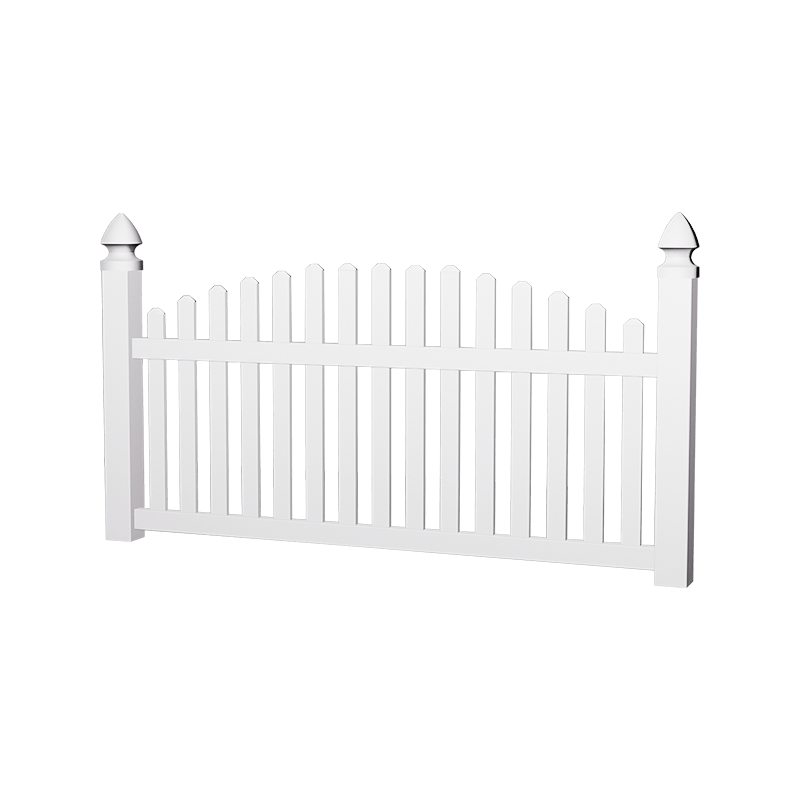
The Dog Ear Top Garden Fence, the ultimate solution for your farm fencing needs. Crafted from 100% virgin PVC, this fence is designed to withstand the elements without the worry of rot or decay, makin...
See Details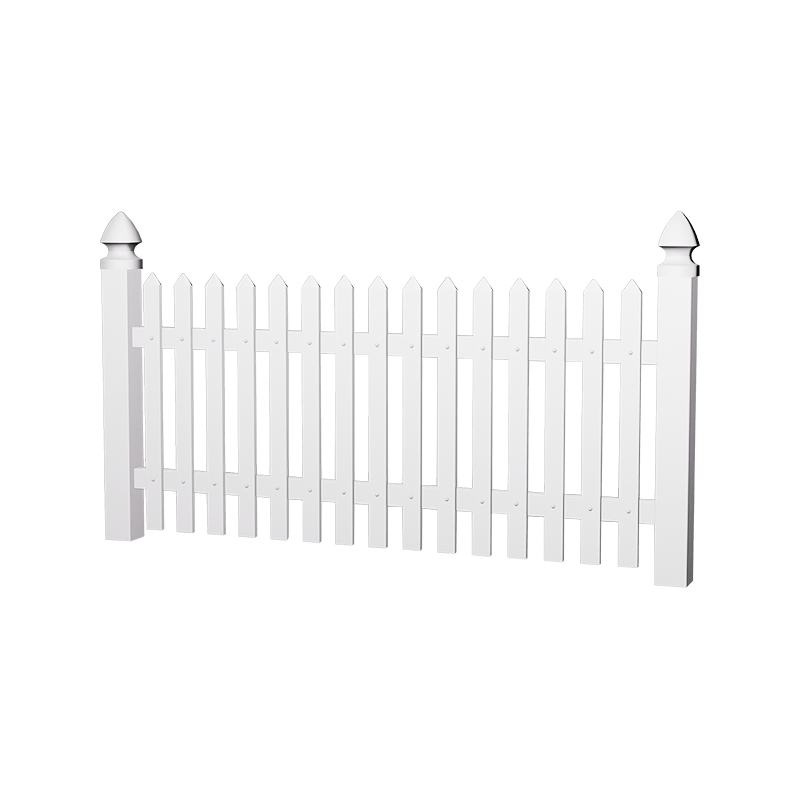
Decorate your outdoor spaces with our durable and stylish PVC Face Mounted Pickets Fence. Designed for easy installation and long-lasting performance, this fence is perfect for residential and commerc...
See Details
Our White Vinyl Fence, measuring 4'H x 8'W, designed for both functionality and aesthetics. Made from 100% virgin PVC plastic, this fence is not coated, ensuring unmatched durability and resistance to...
See Details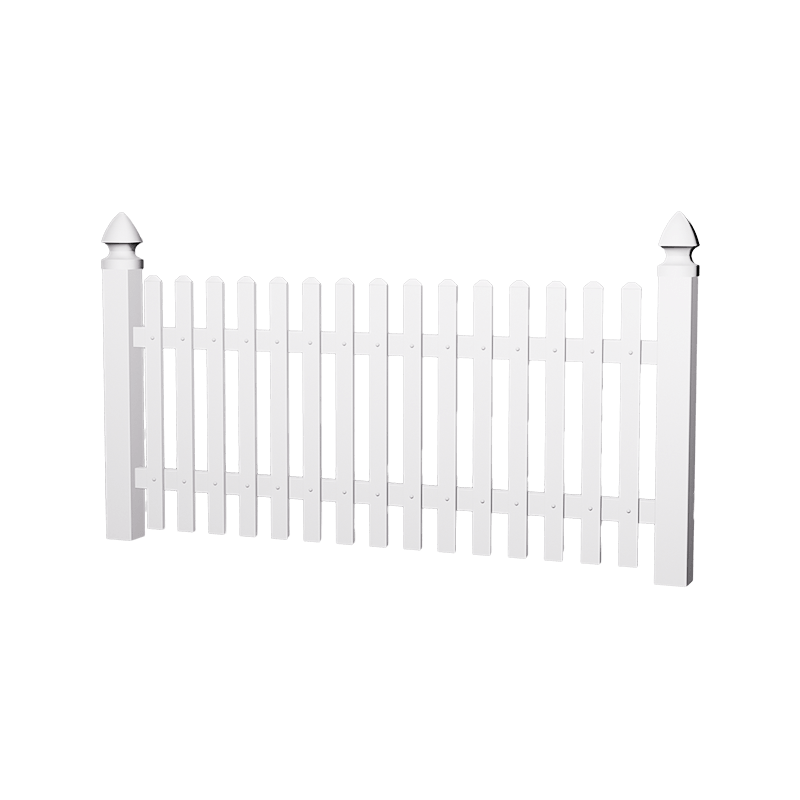
The Traditional Dog Ear Picket is an ideal choice for warehouses, combining aesthetic appeal with practicality. Made from 100% virgin PVC, this durable, low-maintenance fence resists rotting and water...
See Details
We are a professional manufacturer engaged in the research, development,
production, sale, and service of PVC fences and PVC flooring.
Contact Us
Mobile
Copyright © Deqing Huazhijie Railing & Fencing Co.,Ltd. All Rights Reserved.
 Custom Vinyl Fence Manufacturers
 English
 عربى
عربى 中文简体
中文简体 Español