Welcome to Huazhijie!
 +86-572-8086381 / 8282992
 hzjfence1@hzjfence.com



Oct 19, 2026
If you have ever requested a quotation for "PVC fence profiles and panels" and received two price lists that looked like they came from different industries, you are not alone. The two words are used almost interchangeably in everyday conversation, yet on a factory floor they describe different objects — and that difference quietly shapes your freight cost, your installation labor, and how much flexibility you keep as a buyer. Having extruded PVC fencing components since 2003, we have watched many first-time importers learn this the hard way, so here is a plain-language walkthrough of what these parts are, how they are sized, and what is worth checking before a container is booked.
Content
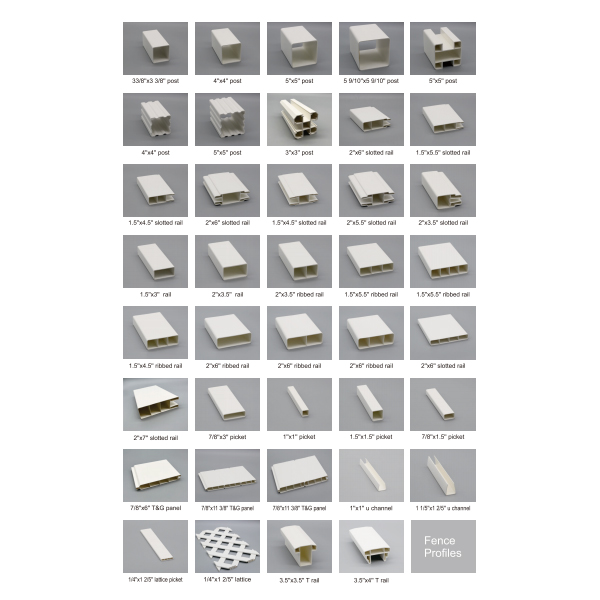
A profile is whatever comes out of the extrusion die: a picket, a rail, a post, a cap, a tongue-and-groove board, a U-channel. Its identity lives in a cross-section drawing — outside dimension, wall thickness, interlock geometry, and any internal ribbing that adds stiffness without adding unnecessary weight. Two profiles can look identical from a metre away and still differ in wall thickness by half a millimetre, which is exactly the kind of gap that shows up two summers later.
A panel is what happens after those profiles are cut to length, punched, fitted with rails and assembled — a 6 ft x 8 ft privacy panel, a 4 ft picket section, a 48 in x 96 in pool rail panel. Posts normally travel separately, because a post is a structural profile rather than part of the infill.
This distinction gives buyers three practical purchasing models. Profiles only, shipped flat, keep freight volume low and let a local workshop do the assembly. Fully assembled panels arrive faster on site but occupy far more container space. The middle route — panels knocked down with rails and pickets bundled together — is often the sweet spot for distributors who warehouse stock and assemble to order.
Most residential and commercial PVC fencing is built from a surprisingly small set of shapes. Once you know the six or seven that matter, a specification sheet becomes much easier to read.
| Component | Cross-section | Common dimensions | Where it goes |
|---|---|---|---|
| Picket | Flat or crowned face, hollow or ribbed | 7/8 x 3 in, 7/8 x 6 in, 1.5 x 1.5 in, 1 x 1 in | Picket and pool panels |
| Rail | Pocket rail or flat rail | 2 x 3.5 in, 2 x 6 in | Horizontal panel framing |
| Post | Square, routed or face-mounted | 4 x 4 in, 5 x 5 in, 6 x 6 in | Structural support |
| T&G board | Tongue-and-groove edge, hollow core | 6 in and 8 in widths | Privacy and semi-private infill |
| U-channel | Open C section | Matched to board thickness | Board capture, top and bottom |
| Cap and trim | Flat, crown, New England, gothic | Matched to post or picket | Finishing and water shedding |
 PVC Fence Profiles and Panels for Residential and Commercial UseDurable virgin PVC fencing profiles with UV stabilization, low maintenance, and multiple styles and colors for residential, commercial, and agricultural projects.View Product →
Caps deserve more attention than they usually get. A New England cap or a gothic cap changes the character of an entire fence line, and because it is a separate small profile, it is also one of the easiest parts to customize for a private-label range. If your catalog needs a distinctive silhouette, the cap is where a modest mold investment goes the furthest.
Panels are where profiles become a product. Full privacy panels use vertical T&G boards captured top and bottom, sometimes finished with a lattice or picket crown. Semi-private styles trade a little screening for airflow and light — louvered infill, lattice tops, picket tops, or spaced boards. Both families are commonly produced in 4 ft, 5 ft and 6 ft heights with 6 ft or 8 ft widths, and lead-free formulations are available where a project specifies them.
 HEA PVC Privacy Panel Fence 6' x 8'Tongue-and-groove privacy panel system with pre-routed posts, aluminum-reinforced bottom rail, and optional caps and colors for complete fence sections.View Product →
Picket panels follow a different logic. Spade, dog ear, scalloped, arched and horizontal layouts all rely on the same picket and rail profiles, but the punch pattern and spacing decide the look. Face-mounted pickets give a cleaner shadow line; pocket rails hide the fixing. Pool and balcony railing panels push the same components toward stricter spacing — a 7/8 x 3 in picket at close centres reads very differently from a 1.5 x 1.5 in picket at wide centres.
For a buyer, the useful question is not "which style is best" but "which panel build survives my market's installation habits". A contractor who fits panels alone on a slope will thank you for a forgiving rail pocket; a distributor selling into coastal humidity will care far more about hardware and cap fit.
Formulation matters as much as geometry. UV stabilizers and titanium dioxide keep a white profile from chalking; impact modifiers matter more in cold markets than in warm ones. Our own production sits within a lead-free, RoHS-conscious framework, with CE and UL94 documentation available for projects that ask for it — and yes, the questions about prolonged UV exposure, salt air and high wind are ones we answer weekly rather than annually.
Three specifications tend to predict field performance better than any brochure claim:
Much of the fencing world still works in imperial sizes, which is why you will see 4 ft, 6 ft and 8 ft heights, 48 in and 96 in widths, and 7/8 in pickets throughout our catalog. Metric projects are equally workable — a profile is only ever as fixed as the mold behind it, and our mold range has grown alongside the product lines rather than ahead of them.
Customization usually falls into four buckets: height and width adjustments, color matching to a sample or a Pantone reference, cap and trim restyling, and packaging that suits your warehouse rather than ours. Garden beds and sign frames in the catalog are already sold on a custom-size basis, which says something about how we prefer to work — the drawing comes first, the quote follows. For OEM and ODM enquiries, send the profile section, the panel layout and the target market; that is enough for a realistic conversation about tooling, minimum quantities and timing.
 PVC Fence Panels Accessories and Custom ComponentsBrackets, post caps, gates, and hinges in virgin PVC, available in multiple styles and colors to complete and customize fencing systems.View Product →
Whether you are comparing three suppliers or reordering from one, the same handful of questions prevents most surprises:
Anyone who has loaded a 40HQ knows that the last 5 percent of volume is where margin lives or dies. A supplier who will discuss loading plans with you is usually a supplier who understands distribution rather than only production.
Inspection should be boring. Wall thickness at multiple points, dimensional check against the approved drawing, color and gloss against the retained sample, interlock fit by sliding a board into its channel, cap fit by hand, and a drop test on a packed carton. Batch consistency matters more than any single perfect sample, so ask how the check is recorded and whether the records travel with the shipment.
It also helps to know how the panels are treated after extrusion — how long they rest before cutting, how they are cooled, how they are stacked. Small process choices show up as bowing on a sunny site six months later, and they are rarely visible in a photograph.
We have been making PVC fencing in Deqing, near Shanghai, since 2003, and exporting for most of that time to Canada, the United States, Europe, Australia and New Zealand. Our factory covers 4,800 square metres with a team of more than 100 people, and we welcome both standard container programs and OEM/ODM work where the drawing is yours and the extrusion is ours. If you are still at the stage of comparing profile sections, feel free to browse the full fence range or send over the panel style you have in mind — we are happy to tell you honestly what will work, what will not, and what it will take to get there.
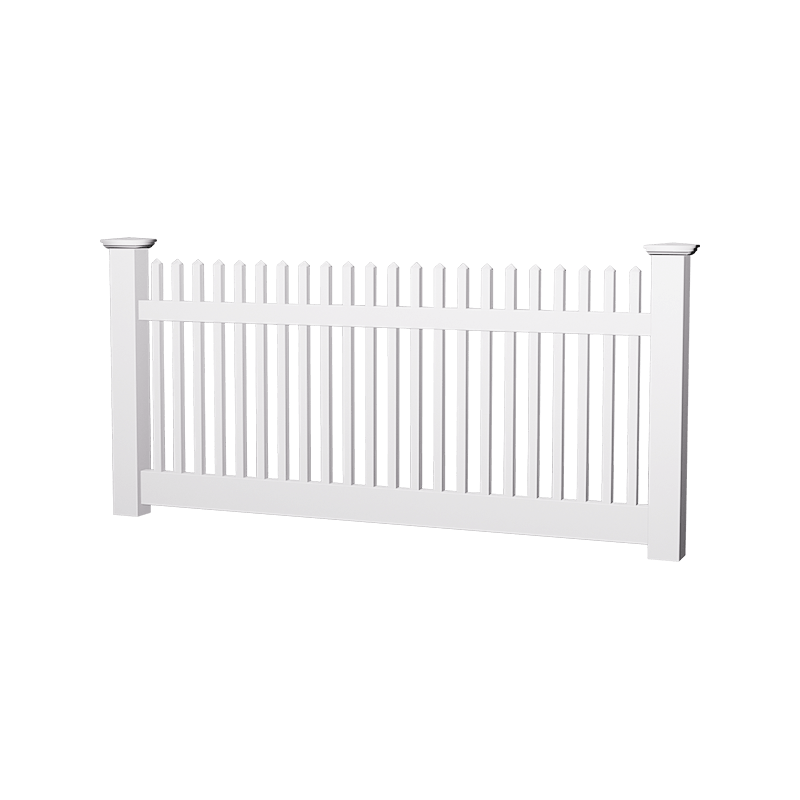
Our 1.5"x1.5" Horizontal Picket Fence, the ultimate garden solution made from 100% virgin PVC for unmatched durability and low maintenance. Designed for easy DIY installation, this fire-proof fence re...
See Details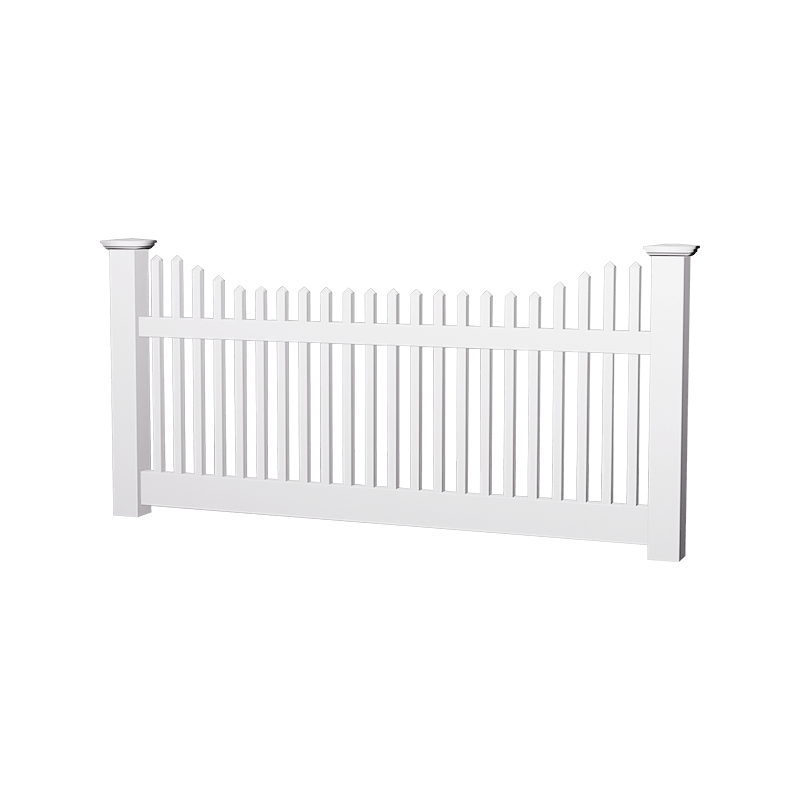
The Special-Shaped Picket Fence, the perfect addition to any home. Crafted from 100% virgin PVC, this fence combines durability and elegance with low maintenance requirements. Designed for easy DIY in...
See Details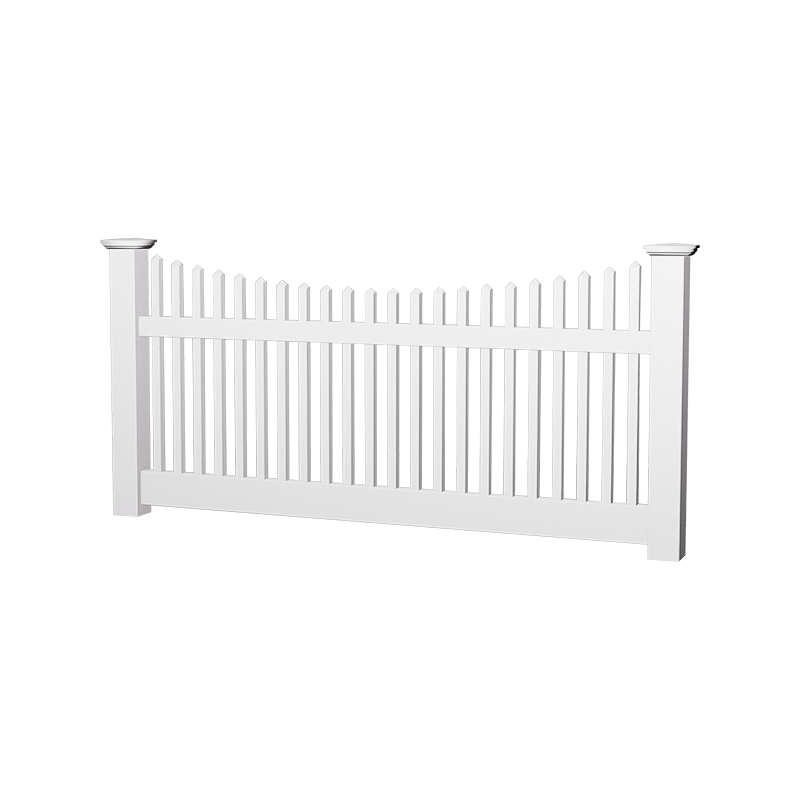
The Special-Shaped Picket Fence, the perfect addition to any home. Crafted from 100% virgin PVC, this fence combines durability and elegance with low maintenance requirements. Designed for easy DIY in...
See Details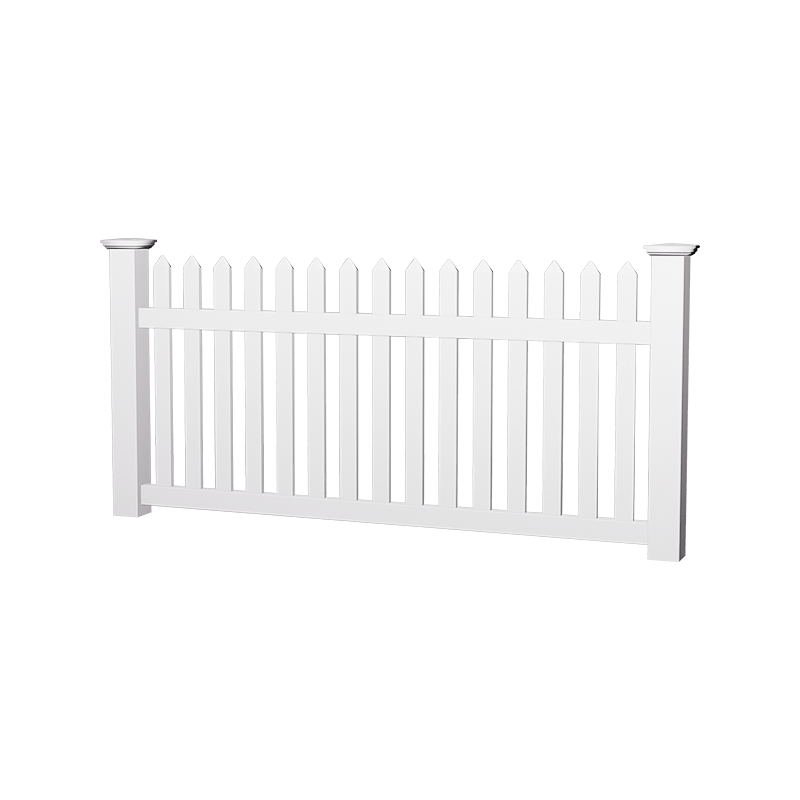
Enhance your home’s exterior with our Traditional Straight Spade Fence, crafted from 100% virgin PVC for exceptional durability and style. This low-maintenance solution is designed for easy installati...
See Details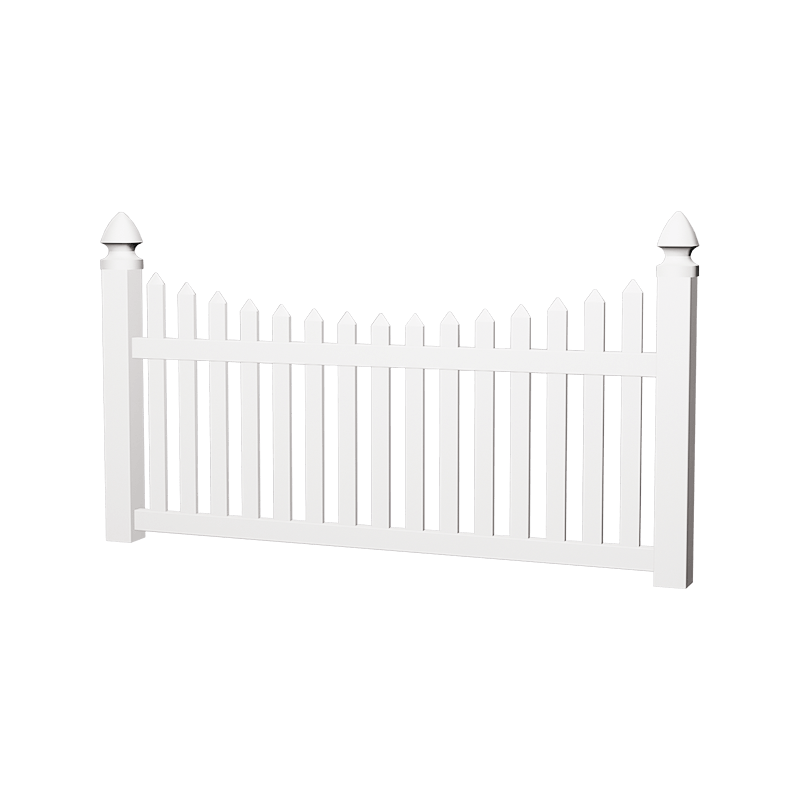
Transform your outdoor space with our 7/8"x3" Outdoor Picket Fence, specifically designed for farm use and outdoor applications. Crafted from 100% Virgin PVC, this durable and high-impact resistant fe...
See Details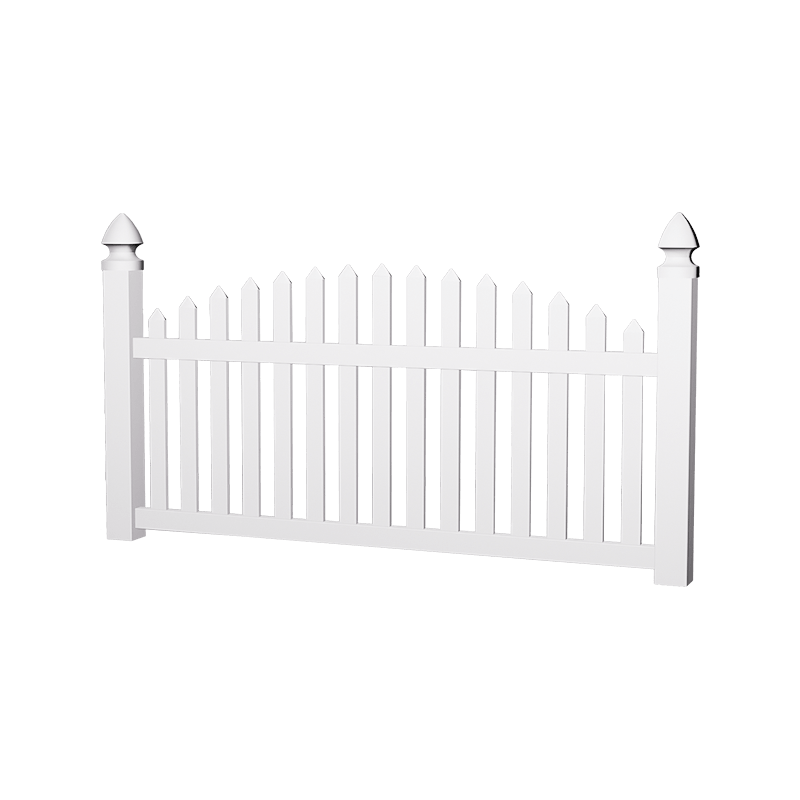
Enhance your farm's aesthetic and functionality with our PVC Arched Picket Fence. Crafted from 100% virgin PVC, this durable and stylish fencing solution combines the classic charm of traditional pick...
See Details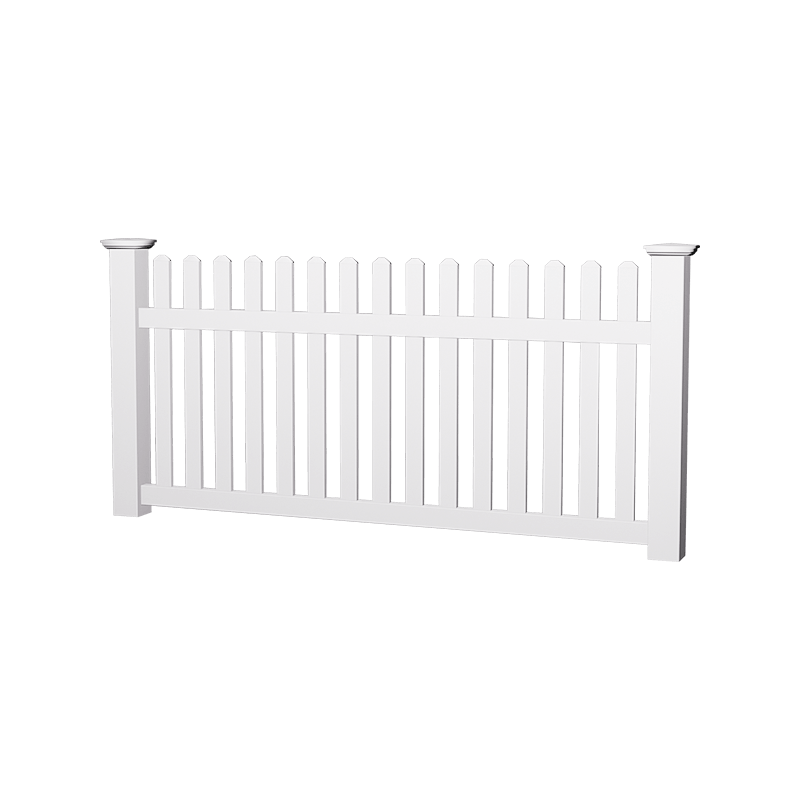
Our durable and versatile Picket Fence, designed specifically for farm use. Crafted from 100% virgin PVC plastic, this fence panel is not coated, ensuring superior quality and longevity. With dimensio...
See Details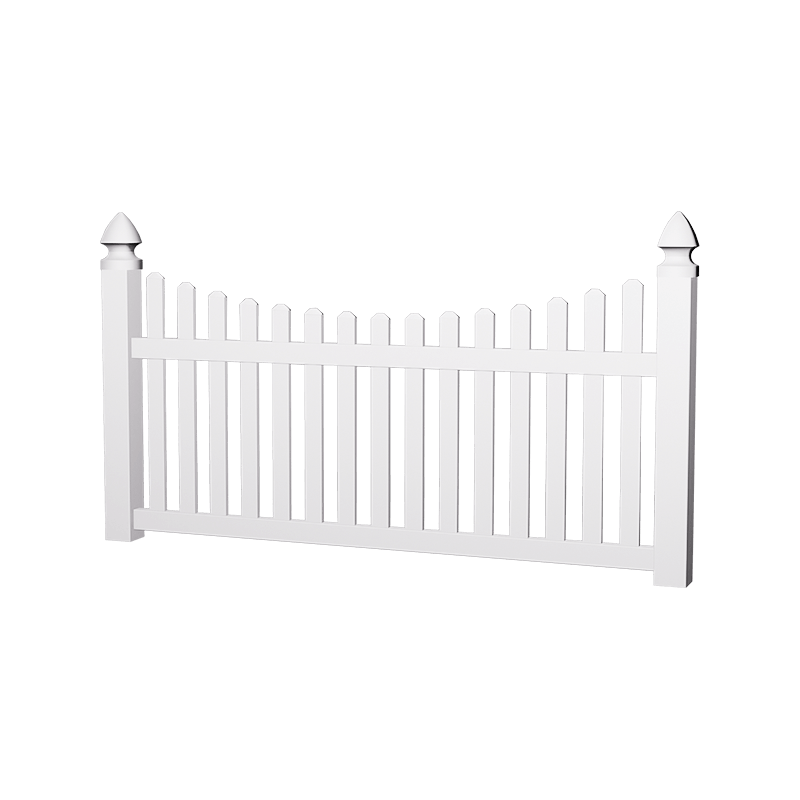
Introducing our 7/8"x3" Plastic Picket, designed specifically for farm applications. Crafted from 100% virgin PVC, this picket is not coated, ensuring maximum durability and resistance to impacts. Wit...
See Details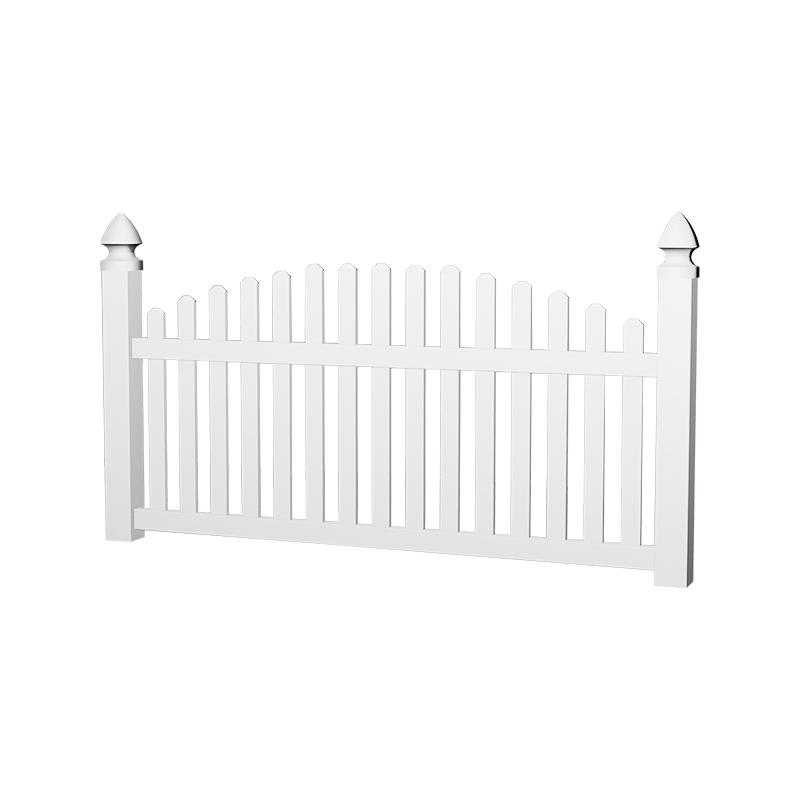
The Dog Ear Top Garden Fence, the ultimate solution for your farm fencing needs. Crafted from 100% virgin PVC, this fence is designed to withstand the elements without the worry of rot or decay, makin...
See Details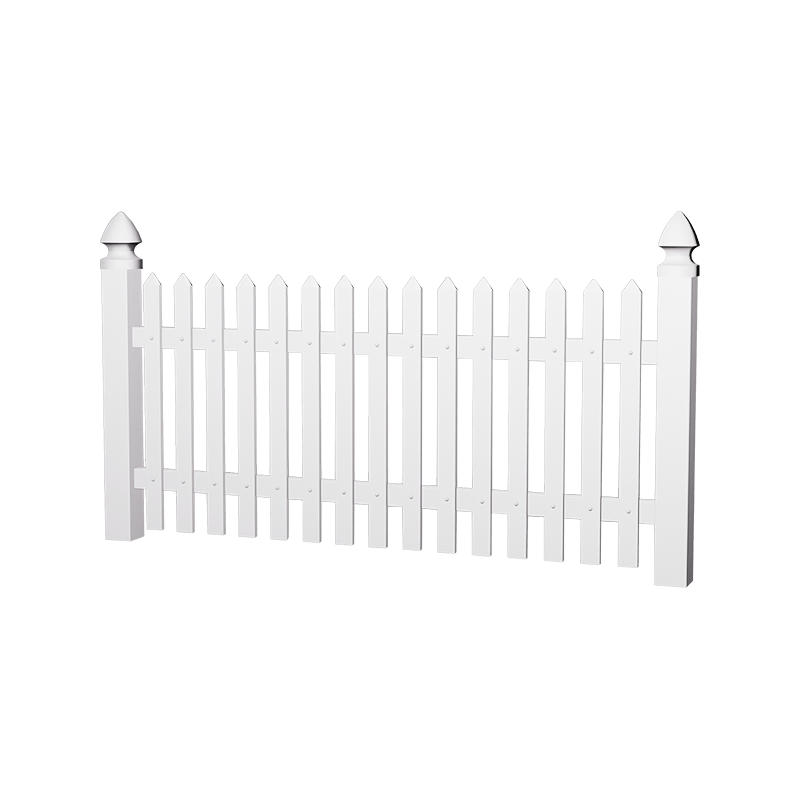
Decorate your outdoor spaces with our durable and stylish PVC Face Mounted Pickets Fence. Designed for easy installation and long-lasting performance, this fence is perfect for residential and commerc...
See Details
Our White Vinyl Fence, measuring 4'H x 8'W, designed for both functionality and aesthetics. Made from 100% virgin PVC plastic, this fence is not coated, ensuring unmatched durability and resistance to...
See Details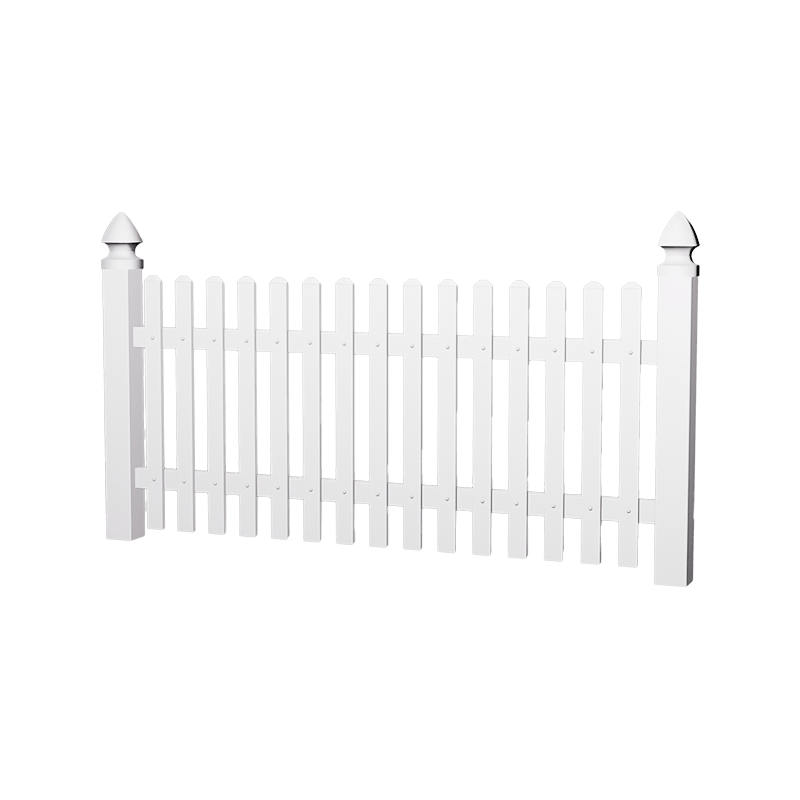
The Traditional Dog Ear Picket is an ideal choice for warehouses, combining aesthetic appeal with practicality. Made from 100% virgin PVC, this durable, low-maintenance fence resists rotting and water...
See Details
We are a professional manufacturer engaged in the research, development,
production, sale, and service of PVC fences and PVC flooring.
Contact Us
Mobile
Copyright © Deqing Huazhijie Railing & Fencing Co.,Ltd. All Rights Reserved.
 Custom Vinyl Fence Manufacturers
 English
 عربى
 中文简体
 Español